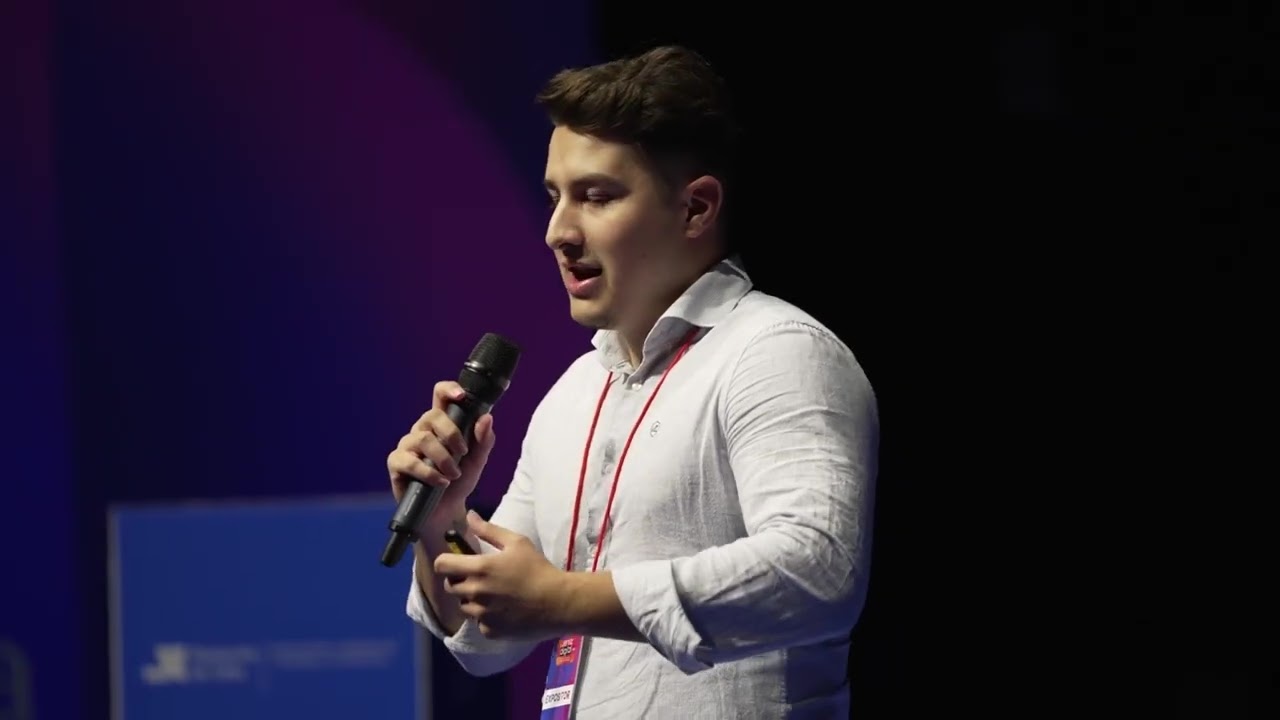
We won first prize at Cámara NEXT 2026 during the fifth edition of Jerez Digital. In its assessment, the jury highlighted an idea we took away from the final. The AI era needs solid foundations, and that is where the jury saw Valendra’s contribution. Receiving that recognition in the city where we are building the company made it especially meaningful. Diario de Jerez reported the result on 28 October.
We presented QDivZero in Jerez, the platform we are building to make AI easier to deploy and operate from Europe. We also talked about Sherry, one of the research projects we have made public.
What we presented in Jerez with QDivZero
With open-weight models, we can download the model parameters and run them on the infrastructure we choose, subject to each model’s licence. The hard part starts in production. We need to find a GPU with enough memory, configure a compatible inference engine and size the service so response times and costs stay manageable as requests increase. That is the infrastructure work we presented in Jerez.
QDivZero is our platform for running AI models and integrating them into applications. Teams can start with available models through an OpenAI-compatible API, bring their own weights or choose an open-weight model from Hugging Face for a dedicated deployment. For dedicated deployments, QDivZero checks memory and runtime requirements, looks for a compatible GPU across providers and prepares the endpoint the application will connect to. Model choice depends on the licence and the compatible capacity available.
A shared interface becomes useful when a product’s needs change. A team can compare several models using the same requests or direct more demanding requests to a different model. It can also compare paying per token with the cost of keeping a dedicated deployment running. That lets the team base its choice on its own product’s quality, latency and usage data.
Why we are building AI infrastructure in Europe
We develop and operate QDivZero from Spain. For companies using AI with internal documents or integrating it into a European product, it matters where the model runs, who processes the information and what is retained. The models included in Unlimited run in Europe. For dedicated deployments, teams can choose from the available regions. For other models accessed through the API, the region depends on the service. We do not use customers’ requests or responses to train models.
We want companies to be able to choose the model and infrastructure that fit their work. If an application already uses an OpenAI-compatible client, teams can reuse that integration and check which features they need before switching models. If the application needs to consult internal documents, the platform offers tools to retrieve relevant passages and pass them to the model as context. Deciding which documents are included, who can access them and how they are retained remains part of the design.
Through QDivZero Enterprise and our private AI offering in Europe, we can help teams evaluate models, choose a region or integrate the API. That is what building this infrastructure from Jerez lets us offer businesses: a European option and an engineering team they can work with directly.
Sherry is one of the research projects we have made public
At Valendra, we also study how models behave. Sherry 0.1 is one of the research projects we have made public. We started with Qwen3.6-35B-A3B to study whether we could adjust reasoning effort to the difficulty of the request. Classifying a routine request and answering a scientific question place different demands on a model. We introduced three effort settings in one version of Sherry to study that difference.
In our internal evaluation on GPQA-Diamond, a benchmark of science questions, Sherry at high effort reached an exact match score of 78.3%, compared with 57.1% for the base model in the same environment. When we evaluate a model for an application, we test the kinds of requests it will receive and measure how long each answer takes and what it costs. That helps us decide how much reasoning effort is worthwhile.
We published Sherry’s weights and model card on Hugging Face alongside a mathematical reasoning dataset. In our technical article on Sherry, we explain how we trained it, what we measured and what still needs to be tested. Sharing these materials lets other teams examine our findings and try the model on their own tasks.
We apply what we learn building products to our client work
Imagine a team that receives invoices by email and types the details into its management system one by one. Before choosing a model, we look at the documents that arrive, which fields need to be checked and which exceptions a person should handle. We build the integration with the software the team already uses and agree how to measure the result. In this case, what matters is the time the team gets back and the errors it avoids.
That kind of project can draw on several areas of our technology consultancy, depending on where the problem lies:
- Artificial intelligence and automation. We test models with examples from the team and integrate them into tasks such as reviewing documents, classifying requests and searching internal knowledge.
- Data engineering. We connect sources and prepare reliable data for applications, analytics and AI systems.
- Custom software development. We build applications, internal tools and APIs. We modernise systems in stages when the business needs them to keep running through the change.
- Cloud and DevOps. We design and migrate infrastructure, automate deployments and give teams visibility into performance and spending.
- Managed hosting. We host and operate websites and applications with the level of management and support each business needs.
A final that brought together talent from across Cádiz
We shared the final with seven other startups from the province of Cádiz. The teams presented ways to bring solar heat to industrial processes, design and prototype physical products, and use AI to record construction site visits. Other projects aimed to make clinical documentation easier, connect people with employers, help small businesses find public tenders, and bring AI models and agents into team workflows.
That range was one of the things we most enjoyed about the final. Each team started from a problem it knew well, from the time a clinician spends documenting a consultation to the difficulty of finding opportunities in public procurement. There is talent here building businesses in very different fields. We were glad to share the stage with the teams proving it. Jerez City Council’s report on Jerez Digital.
Thank you to the Chamber of Commerce of Jerez, the Jerez Digital team and the businesses that trust us with their projects. If there is a process, application or piece of infrastructure your team wants to improve, tell us where you are running into difficulty. That is usually the first question in a good technical conversation.